
Dental Implants for Single Tooth vs. Full Mouth Replacement
Dental Implants for Single Tooth vs. Full Mouth Replacement
Dental implants are arguably the standard for replacing missing teeth. People love them because they look natural and function like real teeth. They also help to preserve the jawbone in a way that bridges and dentures cannot. But the path you take depends on how many teeth need to be replaced.
What Is a Single-Tooth Implant?
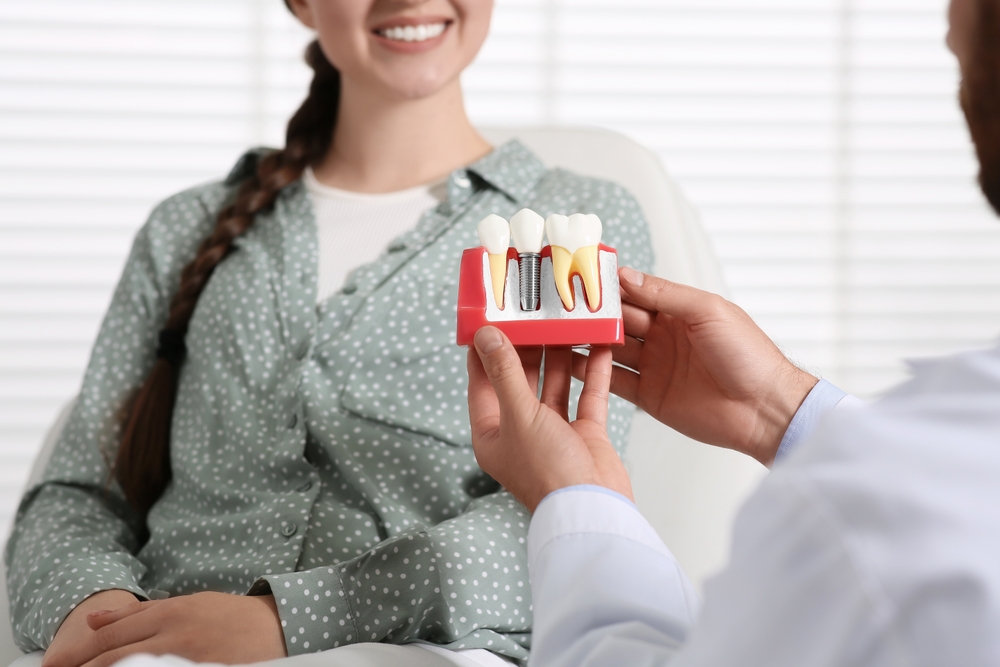
A single-tooth implant replaces a single missing tooth from root to crown. The process begins with the dentist placing a titanium post into the jawbone. Over a few months, the bone fuses to that post in a process called osseointegration. Once the bond is solid, a custom crown is attached. The result looks and feels like the lost tooth. It also stimulates the bone and keeps it healthy, much like a natural tooth root would.
This is a great choice if the teeth next to the gap are still healthy. It keeps those teeth untouched, unlike a dental bridge, which may require altering healthy enamel. With proper care, a single implant can last for 20 years or more.
What Is a Full Mouth Replacement?
When most or all of the teeth in an arch are missing or failing, a full-mouth replacement is the better option. Unlike placing one implant per missing tooth, this approach uses fewer implants to support an entire set of fixed teeth.
The most well-known method is called All-on-4. Four implants are placed in the jaw, with the back two angled to make the most of available bone. The doctor then attaches a full arch of prosthetic teeth to those four anchors. Sometimes, a fifth or sixth implant is added for extra support. The teeth stay in place permanently. You do not remove them at night, as you do with dentures.
A full arch replacement helps you chew, speak, and maintain your facial shape. Many people get a temporary set of teeth on the day of surgery, with the final bridge placed a few months later.
How Do You Decide Between the Two?
The main thing to consider is how many teeth are missing. If you have just one or two gaps with healthy teeth on either side, a single tooth implant is usually best. If four or more teeth are missing in the same row, or if the remaining teeth are not in good shape, a full-mouth replacement is often the better option.
Bone health is also important. Implants need a strong enough jawbone to hold them in place. After losing a tooth, the bone can shrink over time. For a single-tooth implant, a bone graft can often add enough bone if needed. For a full-arch replacement, methods like All-on-4 are made to work with less bone, so you may not need a graft at all.
How much are you willing to spend? A single-tooth implant costs less up front, whereas a full-mouth replacement is a bigger investment. But the higher bill makes sense because a full-mouth replacement also addresses a larger issue. When you look at the cost per tooth, full-arch options can give you better value.
Recovery time varies by option. A single tooth implant means a smaller surgery and a quicker healing time. Full-mouth surgery treats a larger area, but the entire process can be faster than getting several single implants one by one.
To learn more about dental implants for single-tooth or full-mouth replacement, visit Somerset Smile Studio in Somerset, New Jersey. Call (732) 846-2494 to schedule your appointment.
Quick Links
Helpful Articles
article_category: products
article_category: psychiatry
article_category: faqs
article_category: cats
article_category: general
article_category: services
article_category: technology
article_category: dogs
article_category: restorative
article_category: vision therapy
article_category: contact lenses
article_category: health
article_category: conditions
article_category: eye surgery co-management
article_category: exotic
article_category: cosmetic
article_category: surgical procedures
article_category: aesthetics
article_category: preventative
article_category: ocular disease management
article_category: eyeglasses
article_category: eye health
article_category: large animal
[]
article_category: psychiatry
article_category: faqs
article_category: cats
article_category: general
article_category: services
article_category: technology
article_category: dogs
article_category: restorative
article_category: vision therapy
article_category: contact lenses
article_category: health
article_category: conditions
article_category: eye surgery co-management
article_category: exotic
article_category: cosmetic
article_category: surgical procedures
article_category: aesthetics
article_category: preventative
article_category: ocular disease management
article_category: eyeglasses
article_category: eye health
article_category: large animal
[]
Flowbite is an open-source library of interactive components built on top of Tailwind CSS including buttons, dropdowns, modals, navbars, and more.
Check out this guide to learn how to get started and start developing websites even faster with components on top of Tailwind CSS.
All Dental Services
We offer a wide variety of dental services to the Somerset community. Contact us with any questions about our services.
Keep In Touch
For non-urgent questions or to learn more about our services, contact us today!

Hours of Operation
- Monday 10:00am - 6:00pm
- Tuesday 10:00am - 6:00pm
- Wednesday 10:00am - 6:00pm
- Thursday 10:00am - 6:00pm
- Friday 9:00am - 2:00pm
- Saturday By Appointment Only
- Sunday Closed
© 2026 Somerset Smile Studio. All rights Reserved. Accessibility Statement - Privacy Policy - Sitemap
Powered by 